
Everything Travelers Need to Know
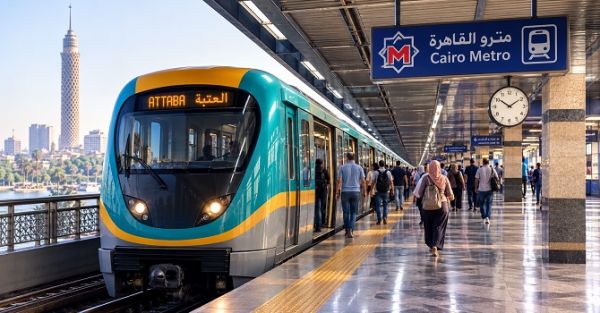
If you're planning a trip to Egypt, you may wonder: Does Cairo have a metro? The answer is yes—and it's one of the city's biggest travel advantages. While Cairo is famous for its bustling streets and legendary traffic, beneath the surface lies an extensive rapid transit system that helps millions of people move around every day.
The Cairo Metro is not just convenient; it's also historically significant. It was Africa's first metro system and the first in the Arab world, setting the standard for urban rail transport across the region. Today, it remains one of the fastest, cheapest, and most reliable ways for both locals and visitors to travel across Greater Cairo.
Whether you're visiting the Egyptian Museum, heading to Old Cairo, or exploring modern districts, understanding how the Cairo Metro works can save you time, money, and stress.
Quick Facts About the Cairo Metro
Here are the essentials every traveler should know:
- Opened in 1987
- First metro system in Africa and the Middle East
- Serves Greater Cairo
- Carries millions of passengers daily
- Currently operates three main lines
- Additional lines are under construction and expansion
- One of the world's busiest metro systems
- Affordable fares compared to taxis and ride-hailing services
For many visitors, taking the metro is an experience in itself, offering a glimpse into everyday life in Egypt while avoiding Cairo's famous traffic congestion.
Why Was the Cairo Metro Built?
Cairo has long been one of Africa's largest and most densely populated cities. As the population grew rapidly throughout the 20th century, road traffic became increasingly difficult to manage.
By the 1970s and 1980s, planners recognized that expanding roads alone wouldn't solve the problem. The solution was a modern rapid transit network capable of transporting hundreds of thousands of passengers each day without adding more vehicles to already crowded streets.
Construction began in the early 1980s, and the first section officially opened in 1987, immediately transforming urban transportation.
Today, the metro continues expanding to keep pace with Cairo's growing metropolitan area, which is home to more than 20 million people.
How Many Metro Lines Does Cairo Have?
Currently, Cairo Metro operates three lines, each serving different parts of the metropolitan area.
Line 1
The oldest line runs from the northern suburbs through central Cairo and south toward Helwan.
This line is especially useful for travelers staying in downtown Cairo because it connects many residential neighborhoods with the city center.
Line 2
Line 2 crosses the Nile River and links Giza with central Cairo before continuing northeast.
This line is particularly helpful for visitors heading toward Giza while staying in downtown Cairo.
Line 3
The newest and most modern line continues expanding and connects several important districts.
It links central Cairo with eastern neighborhoods and includes stations serving major attractions, shopping districts, and eventually Cairo International Airport through ongoing expansion projects.
Is the Metro Useful for Tourists?
Absolutely.
Although many visitors initially rely on taxis or ride-hailing apps, the metro often becomes the quickest option during peak traffic hours.
Popular reasons tourists use the Cairo Metro include:
- Avoiding heavy road traffic
- Saving transportation costs
- Reaching central Cairo quickly
- Experiencing local daily life
- Traveling safely during busy periods
The trains are modern, air-conditioned on most routes, and significantly faster than road travel during rush hour.
Which Tourist Attractions Can You Reach?
While the metro doesn't stop directly at every attraction, it provides easy access to many of Cairo's most famous sites.
Using the metro, visitors can conveniently reach areas near:
- Tahrir Square
- The Egyptian Museum
- Old Cairo
- Coptic Cairo
- Islamic Cairo
- Zamalek (with a short taxi ride)
- Giza district (followed by local transport to the pyramids)
Many travelers combine metro rides with short taxi trips for maximum convenience.
Is the Cairo Metro Easy to Use?
Compared to many large cities around the world, the Cairo Metro is surprisingly straightforward.
Stations are clearly marked, maps are available, and newer stations include both Arabic and English signage.
Ticket vending machines are becoming more common, although many passengers still purchase tickets at staffed counters.
Security screening is present at station entrances, similar to many metro systems worldwide.
How Much Does It Cost?
One of the metro's biggest advantages is affordability.
Ticket prices are based on the number of stations traveled, making short trips extremely inexpensive compared to taxis.
Even longer journeys across much of Cairo generally cost only a small amount, making the metro one of the city's best travel bargains.
For budget-conscious travelers, it's difficult to find a more economical way to explore Cairo.
Is It Safe?
For most travelers, the Cairo Metro is considered a safe way to travel.
Like any major city's public transportation system, it's wise to:
- Keep valuables secure.
- Stay aware of your surroundings.
- Avoid displaying expensive items unnecessarily.
- Travel outside peak rush hours if you prefer less crowded trains.
Security personnel are present throughout much of the network, and stations are monitored.
Women's Carriages
One feature that surprises many international visitors is the availability of women-only carriages.
These designated cars operate during much of the day and provide an optional space for female passengers.
Women are free to use regular mixed carriages as well.
Rush Hour Tips
Cairo Metro becomes extremely busy during weekday commuting hours.
If possible, tourists may prefer traveling:
- Mid-morning
- Early afternoon
- After the evening rush
Outside peak periods, trains are generally much more comfortable, especially for visitors carrying backpacks or luggage.
Does the Metro Reach the Pyramids?
Not directly.
This is one of the most common misconceptions among first-time visitors.
The metro can take you to Giza, but you'll still need a taxi, ride-hailing service, or local transportation to reach the Giza Pyramids Plateau.
Even so, combining the metro with a short taxi ride is often faster than driving all the way from central Cairo during heavy traffic.
Expansion Continues
The Cairo Metro is continuously growing.
New stations and extensions are being built to serve additional neighborhoods and improve connections across Greater Cairo.
Future projects aim to improve access to residential suburbs, business districts, and transportation hubs, making public transit even more convenient for residents and visitors alike.
This ongoing investment reflects Cairo's commitment to creating a more sustainable and efficient transportation network.
Should Tourists Use the Cairo Metro?
For most visitors, the answer is yes.
If you're comfortable using public transportation, the metro offers an excellent combination of speed, affordability, and convenience. It allows you to bypass some of the world's most famous traffic while experiencing everyday life in Egypt.
Many travelers use taxis exclusively during their first day before realizing that the metro can dramatically reduce travel times across the city. Once you understand the system, it's often the smartest way to move between central neighborhoods.
Whether you're exploring ancient monuments, historic mosques, vibrant markets, or modern shopping districts, the Cairo Metro can become one of the most useful tools in your travel itinerary.
Complete your Cairo adventure with our carefully planned Egypt travel packages, combining Cairo’s highlights with unforgettable experiences across Egypt.
Best Egypt Tours 2026
| Tour | Itinerary | Price |
|---|---|---|
| Egypt Solar Eclipse Tour | 9 Days | $ 8995 |
| All Inclusive Vacations Egypt | 10 Days | $ 1999 |
| Cairo and Luxor Holidays | 5 Days | $ 1225 |
| Pyramids and Nile Cruise Holidays | 8 Days | $ 1595 |
| Cairo Private Tours | 4 Days | $ 710 |
| Cairo City Breaks | 3 Days | $ 375 |
| Luxury Egypt Tours with Nile Cruise | 12 Days | $ 2470 |
| Nile Cruise and Red Sea Stay | 12 Days | $ 2685 |
| Cairo Nile Cruise and Hurghada | 12 Days | $ 2065 |
| Package Trips to Egypt | 10 Days | $ 2065 |
| Egypt Honeymoon Packages | 10 Days | $ 3180 |