
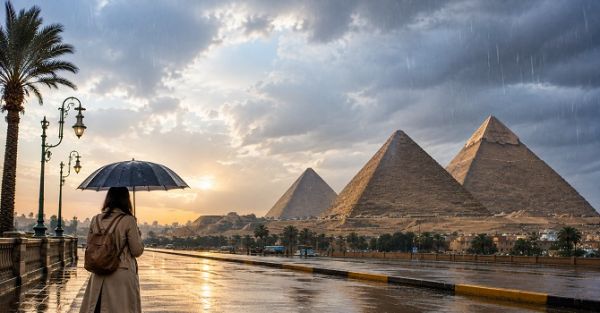
A Traveler’s Guide to Rainfall and Weather in Egypt
If you imagine Egypt, you probably picture golden deserts, bright sunshine, the Nile, and ancient monuments under a clear blue sky. So it is natural to wonder: does it rain in Egypt?
The short answer is yes, it does rain in Egypt—but rainfall is generally rare, light, and highly uneven across the country.
Egypt has a predominantly hot, dry desert climate. Rainfall is concentrated mainly in the north, particularly along the Mediterranean coast, while large parts of Upper Egypt and the Western Desert receive almost no rain during an average year. This is one reason Egypt is such a popular destination for travelers looking for sunshine and relatively predictable weather.
But Egypt's relationship with rain is more interesting than the simple image of a completely rainless desert suggests.
How Much Rain Does Egypt Get?
Egypt is one of the world's driest countries, but rainfall varies considerably from one region to another.
According to climate information compiled by the Food and Agriculture Organization, average annual rainfall can range from roughly 60 to 190 millimeters along parts of the Mediterranean coast, while the Nile Delta generally receives around 25 to 60 millimeters. In Upper Egypt and nearby desert areas, annual rainfall can be less than 25 millimeters.
Other assessments place the country's annual rainfall average at around 51 millimeters, with northern coastal areas receiving substantially more and parts of southern Egypt receiving almost none. Rainfall is also irregular, meaning that one year can be noticeably wetter than another.
To put this into perspective, a traveler from a rainy part of Europe may find Egypt's relationship with rain quite surprising. In many Egyptian destinations, rain is not something people plan their daily lives around.
Does It Rain in Cairo?
Yes, Cairo does get rain.
However, Cairo's rainfall is generally limited, particularly when compared with cities in Europe, North America, or tropical regions.
Rain is more likely during the cooler months, especially from late autumn through winter and into early spring. A rainy day in Cairo may involve cloudy skies followed by a short shower rather than hours of continuous rainfall.
For travelers, this means that rain normally isn't a major obstacle to visiting Cairo's major attractions:
- The Pyramids of Giza
- Egyptian Museum
- Citadel
- historic mosques
- churches
- markets
can still be enjoyed throughout much of the year.
The bigger issue can sometimes be the opposite: Cairo's dry climate, dust, heat, and strong sunshine can be much more noticeable than its rain
When Is the Rainy Season in Egypt?
Egypt does not have a traditional rainy season like countries with tropical climates.
Instead, rainfall is primarily associated with the winter months, particularly in northern Egypt. The country's climate is generally described as having relatively mild, wetter winters and hot, dry summers.
The northern Mediterranean coast receives the most significant rainfall, while southern destinations such as Luxor and Aswan are considerably drier.
This distinction is important for travelers planning an Egypt vacation. If you are visiting Cairo, Giza, Luxor, or Aswan, rain is generally not something you need to build your itinerary around.
If you are traveling to the Mediterranean coast, especially Alexandria and areas farther west or east along the coast, winter rainfall is more relevant.
Which Parts of Egypt Get the Most Rain?
The answer is surprisingly straightforward: northern Egypt gets the most rain.
The Mediterranean coastline is the wettest part of the country. Alexandria and other northern coastal areas can experience noticeably more winter rainfall than cities farther south.
The Nile Delta also receives more rain than Upper Egypt, although its climate remains relatively dry compared with many other parts of the world.
As you move south toward Luxor and Aswan, rainfall becomes increasingly uncommon. Much of Upper Egypt has an extremely dry climate, with some areas receiving less than 25 millimeters of rain annually.
Farther west, the vast Western Desert is even drier. Some southern and western areas of Egypt receive average rainfall of less than 5 millimeters per year.
This dramatic difference helps explain Egypt's distinctive geography: a narrow, intensely green agricultural corridor along the Nile surrounded by enormous expanses of desert.
Can It Rain Heavily in Egypt?
Although rain is uncommon, heavy rainfall can happen.
This is one of the most interesting aspects of Egyptian weather. Because the country is so dry, urban infrastructure and desert terrain are not dealing with frequent rainfall in the way that wetter countries do.
Occasionally, intense rainstorms can occur, particularly in northern coastal areas, Sinai, and parts of the Red Sea region. In exceptional circumstances, heavy rainfall can produce flash flooding, especially where water runs rapidly through valleys and low-lying desert areas.
So while Egypt is generally dry, it would be inaccurate to say that serious rainstorms are impossible.
Does It Rain in Luxor and Aswan?
It can, but rain is extremely uncommon compared with northern Egypt.
Luxor and Aswan are among the country's best-known destinations for ancient Egyptian history and Nile cruises, and both are located far south of the Mediterranean rainfall zone.
Visitors can generally expect a very dry climate. The possibility of rain exists, but it is not normally something that dominates travel planning.
For someone taking a Nile cruise from Luxor to Aswan, the bigger weather considerations are usually temperature, sunshine, and the difference between hot daytime conditions and cooler evenings during the winter season.
Does It Rain in Sharm El Sheikh and Hurghada?
Rainfall is also limited in Egypt's Red Sea resort destinations.
Hurghada, Sharm El Sheikh, Marsa Alam, and other Red Sea destinations are famous partly because of their predominantly dry and sunny climate.
The Red Sea coast can receive occasional rain, and unusual weather events can produce heavier showers, but rainfall is generally infrequent.
For beach travelers, this contributes to Egypt's appeal as a destination for
- sun holidays
- diving
- snorkeling
- winter escapes.
The Red Sea is particularly attractive to travelers from colder climates who want sunshine without necessarily traveling to a tropical destination.
Is Rain a Problem When Visiting Egypt?
For most tourists, rain is not a major concern when planning a trip to Egypt.
If you are visiting Cairo, Giza, Luxor, Aswan, or the Red Sea resorts, you are much more likely to spend your vacation dealing with sunshine and heat than persistent rainfall.
That said, winter travelers should still be prepared for the occasional shower, particularly in Cairo and northern Egypt.
A lightweight waterproof jacket or compact umbrella can be useful during winter, especially if your itinerary includes Cairo or Alexandria. You probably will not need to pack heavy rain gear simply because you are traveling to Egypt.
What Does Egypt’s Dry Climate Mean for Travelers?
Egypt's dry climate is one of the country's defining travel characteristics.
It allows visitors to explore ancient temples, tombs, pyramids, desert landscapes, and historic neighborhoods without the frequent rain interruptions experienced in wetter destinations.
However, the lack of rain also means travelers should pay attention to sun protection, hydration, and temperature.
During the hotter months, the intense sunshine can make sightseeing tiring, especially around large archaeological sites where shade may be limited. This is one reason many travelers prefer the cooler months for extensive sightseeing.
The dry conditions also contribute to the extraordinary preservation and visual character of Egypt's desert landscapes and ancient monuments.
Explore Egypt with our carefully planned Egypt travel packages, combining the Pyramids, ancient temples, Nile cruises, and Red Sea experiences into memorable journeys.
Best Egypt Tours 2026
| Tour | Itinerary | Price |
|---|---|---|
| Egypt Solar Eclipse Tour | 9 Days | $ 8995 |
| All Inclusive Vacations Egypt | 10 Days | $ 1999 |
| Cairo and Luxor Holidays | 5 Days | $ 1225 |
| Pyramids and Nile Cruise Holidays | 8 Days | $ 1595 |
| Cairo Private Tours | 4 Days | $ 710 |
| Cairo City Breaks | 3 Days | $ 375 |
| Luxury Egypt Tours with Nile Cruise | 12 Days | $ 2470 |
| Nile Cruise and Red Sea Stay | 12 Days | $ 2685 |
| Cairo Nile Cruise and Hurghada | 12 Days | $ 2065 |
| Package Trips to Egypt | 10 Days | $ 2065 |
| Egypt Honeymoon Packages | 10 Days | $ 3180 |
| Wheelchair Accessible Nile Cruise | 4-5 Days | $ 1145 |
| Cairo Wheelchair Accessible Tours | 5 Days | $ 625 |
| Cairo and Nile Cruise for Disabled Travellers | 8 Days | $ 3075 |
| Egypt Wheelchair Accessible Tours | 10 Days | $ 2999 |