
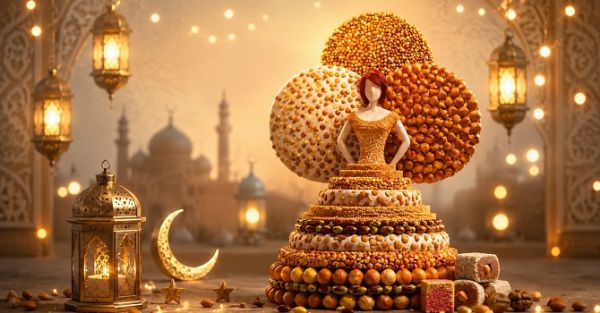
The Sweet Egyptian Tradition Behind Mawlid Celebrations
Have you ever walked through an Egyptian street during Mawlid season and wondered why the shops suddenly fill with colorful boxes of sweets, sesame bars, peanuts, chickpeas, and even sugar dolls shaped like brides and horses?
This is Halawet El Moulid, literally meaning “Mawlid sweets,” one of Egypt’s most recognizable seasonal food traditions. For Egyptians, these sweets are more than a dessert. They are connected with family memories, religious celebrations, childhood, local craftsmanship, and a distinctive part of Egyptian cultural heritage.
If you are curious about Egyptian food traditions, Mawlid celebrations in Egypt, or what you might encounter while traveling through Egypt during this season, Halawet El Moulid offers a fascinating glimpse into everyday Egyptian culture.
What Is Halawet El Moulid?
Halawet El Moulid refers to a collection of traditional sweets associated with Al-Mawlid Al-Nabawi, the annual commemoration of the birth of Prophet Muhammad.
In Egypt, the occasion is marked by:
- religious gatherings
- decorations
- charitable acts
- food
- the sale and sharing of special sweets
Egypt’s official tourism platform describes Mawlid celebrations as featuring specially made sweets molded into traditional designs, particularly dolls and horses, which are shared with children.
The sweets themselves come in many forms. Traditional varieties include:
- sesame brittle (semsemia)
- peanut brittle (foulia)
- chickpea brittle (homsia)
- soft, chewy confection that is often filled with nuts (malban)
Modern sweet shops may also offer versions containing pistachios, almonds, hazelnuts, cashews, dried fruit, or other ingredients.
For a visitor, the colorful displays can look like an entirely different side of Egyptian cuisine—one that appears only for a particular season.
Why Is Halawet El Moulid Connected to Egypt?
The history is interesting, but it is also important to separate documented history from popular stories.
Mawlid celebrations in Egypt have a long history associated with different periods of Egyptian rule. Egypt’s State Information Service states that public Mawlid celebrations developed in Egypt during the Fatimid period, with an early recorded celebration associated with the Fatimid ruler al-Mu'izz li-Din Allah.
The exact origin of today's sweets, however, is less certain.
Several popular Egyptian traditions connect the famous Arouset El Moulid, or Mawlid bride, and the horse-shaped sweets to the Fatimid era. Some stories associate them with royal processions and celebrations, while others connect the shapes to stories involving the Fatimid ruler al-Hakim bi-Amr Allah and his wife.
Egyptian cultural sources acknowledge that there are several competing explanations for the origin of the famous bride and horse.
So, if you hear someone confidently say that one particular story is definitely the origin, it is worth remembering that the historical evidence is not conclusive.
The Famous Arouset El Moulid
Perhaps the most recognizable symbol of Halawet El Moulid in Egypt is Arouset El Moulid—the Mawlid bride.
Traditionally, it is made from a hardened sugar mixture and decorated with colorful paper clothing and accessories. The result is less like an ordinary piece of candy and more like a miniature cultural artifact.
The Egyptian General Organization for Cultural Palaces describes the sugar bride as an important element of Egyptian popular heritage and records several traditions concerning its origins.
For generations of Egyptian children, receiving one of these colorful figures was part of the excitement of Mawlid season. Even when the candy itself was not eaten immediately, the decorated figure could remain in the home as a temporary festive decoration.
There is also a traditional horse or knight figure, commonly associated with boys in older Egyptian customs.
Today, these traditional shapes continue to exist alongside much more sophisticated sweets.
What Sweets Are Included in Halawet El Moulid?
One of the pleasures of discovering Halawet El Moulid is realizing that it is not a single dessert.
Semsemia: is made primarily from sesame seeds bound together with a sweet syrup. Its crunchy texture and nutty flavor make it one of the classic varieties.
Foulia: or peanut brittle, combines roasted peanuts with a firm sugar syrup. It is simple, crunchy, and strongly associated with traditional Egyptian Mawlid sweets.
Homsia: is made with chickpeas and sweet syrup. Chickpeas may sound surprising as the foundation of a dessert, but legumes and seeds have long played a role in Egyptian festival foods.
Malban: is softer and chewier. It resembles a traditional gelatinous confection and may contain nuts such as walnuts or pistachios.
Modern Egyptian sweet shops have expanded the range considerably. Boxes may include pistachio, almond, hazelnut, cashew, coconut, dried fruit, and other premium ingredients. Egyptian media sources note that these newer varieties have developed alongside the traditional semsemia, foulia, homsia, and malban.
Why Are Nuts and Seeds So Important?
There is an interesting cultural connection between Halawet El Moulid and ingredients such as sesame, peanuts, chickpeas, and other seeds and nuts.
These ingredients are relatively simple, but when combined with sugar syrup, they become festive foods that can be produced, packaged, sold, and shared in large quantities.
Historical research on Egyptian mulid festivals also shows the importance of chickpeas, nuts, seeds, and sweets in festival markets, particularly in the Egyptian Delta. A study of the nineteenth-century celebrations surrounding Ahmad al-Badawi in Tanta documented the presence of sweets, nuts, seeds, and chickpeas around the festival markets.
This helps explain why the tradition is about more than one religious occasion. Mulid culture in Egypt has historically brought together food, markets, visitors, religious practices, and popular celebrations.
What Does Mawlid Season Look Like in Egypt?
For travelers, the most interesting part may be seeing how the tradition appears in everyday life.
As Mawlid approaches, sweet shops and temporary stalls can become noticeably more colorful. Boxes of sweets are displayed in windows, while traditional sugar figures may appear alongside modern premium assortments.
Families buy boxes to take home or give to relatives and friends. Children may receive the traditional sugar figures, while adults often focus on assorted boxes containing different sweets.
The atmosphere varies from one Egyptian city to another, but the tradition can be particularly interesting in older neighborhoods and communities where local celebrations remain strong.
In Alexandria, for example, cultural documentation of Mawlid traditions describes sweets being sold in tents and local communities distributing food and drinks during the celebrations.
Is Halawet El Moulid Only About Food?
Not at all.
That is perhaps the most important thing for a traveler to understand.
Halawet El Moulid represents family tradition and social connection as much as it represents dessert. A box of sweets can be purchased for the household, offered to guests, exchanged between relatives, or given as a seasonal gift.
For many Egyptians, the experience brings back childhood memories: visiting the sweet shop with parents, choosing a colorful Arouset El Moulid, opening a large box at home, and deciding which piece to try first.
This emotional connection is one reason the tradition has survived despite major changes in Egyptian lifestyles and food culture.
Can Travelers Try Halawet El Moulid in Egypt?
Yes, and it can be a memorable way to experience authentic Egyptian food culture.
If your trip coincides with Mawlid season, look for established Egyptian confectionery shops and local sweet markets. Instead of simply buying a famous Egyptian dessert such as baklava or basbousa, ask about Halawet El Moulid and the seasonal varieties available.
You may encounter traditional brittle made from sesame, peanuts, or chickpeas, alongside soft malban and modern boxes filled with premium nuts.
A useful phrase to remember is “Halawet El Moulid” (حلاوة المولد). Asking about it can open the door to conversations about Egyptian traditions, family customs, and the history of Mawlid celebrations.
A Sweet Taste of Egyptian Culture
Halawet El Moulid is easy to underestimate. At first glance, it may simply look like a collection of colorful sweets sold during a religious holiday.
But look closer and you will find layers of Egyptian history and culture: Fatimid-era traditions, religious celebrations, popular folklore, family customs, local food production, festival markets, and childhood memories.
The exact origin of some traditions—especially the famous sugar bride and horse—is still debated, but their place in Egyptian popular culture is unmistakable.
For curious travelers, that is what makes Halawet El Moulid so interesting. It is not simply something to taste. It is something to experience.
And if you happen to be in Egypt during Mawlid season, don't just walk past the colorful sweet displays. Stop, look at the traditional shapes, ask what the different sweets are called, and try a piece.
You may discover that one of Egypt's most fascinating cultural experiences comes wrapped in sugar, sesame, peanuts, and a little bit of childhood nostalgia.
Want to experience Egypt’s traditions, flavors, and ancient heritage in person? Explore our Egypt travel packages and discover Cairo’s historic landmarks, Luxor and Aswan, the Nile Valley, and the timeless beauty of Egypt on a relaxing Nile cruise. Whether you are interested in culture, history, or an unforgettable journey along the Nile, our Egypt tours make it easy to experience the country beyond the famous monuments.
Best Egypt Tours 2026
| Tour | Itinerary | Price |
|---|---|---|
| Egypt Solar Eclipse Tour | 9 Days | $ 8995 |
| All Inclusive Vacations Egypt | 10 Days | $ 2940 |
| Cairo and Luxor Holidays | 5 Days | $ 1305 |
| Pyramids and Nile Cruise Holidays | 8 Days | $ 1690 |
| Luxury Egypt Tours with Nile Cruise | 12 Days | $ 2610 |
| Nile Cruise and Red Sea Stay | 12 Days | $ 2815 |
| Cairo Nile Cruise and Hurghada | 12 Days | $ 2200 |
| Package Trips to Egypt | 10 Days | $ 2165 |
| Egypt Honeymoon Packages | 10 Days | $ 3180 |
| Egypt Wheelchair Accessible Tours | 10 Days | $ 3225 |
| Cairo and Nile Cruise Package | 7 Days | $ 1465 |
| Nile Cruise and Stay | 8 Days | $ 2300 |
| Egypt Pyramid Tour Packages | 8 Days | $ 1775 |
| Luxor and Aswan Tours | 4 Days | $ 665 |
| 5 Star Egypt Tours | 8 Days | $ 1775 |