
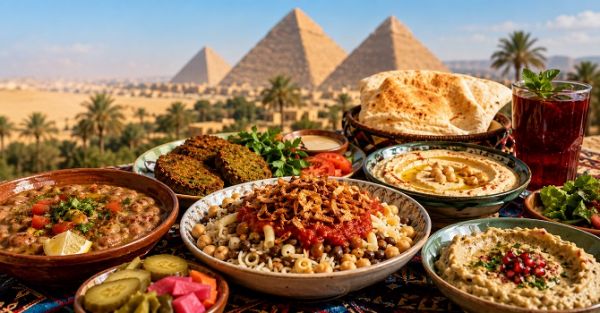
What Travelers Should Know
If you are planning a trip to Egypt and you do not eat meat, you may be wondering: Can you actually eat well in Egypt as a vegetarian or vegan?
The short answer is yes—and probably better than you expect.
Egyptian cuisine has a surprisingly large selection of dishes built around beans, lentils, vegetables, herbs, bread, rice and tahini. Some of the country's most famous everyday foods are naturally vegetarian or vegan, rather than modern dishes created specifically for plant-based travelers. Egypt's official tourism platform itself highlights ful, taameya and koshary among its classic foods, with taameya described as vegan and koshary suitable for both vegetarians and vegans.
For a curious traveler, this means that avoiding meat does not necessarily mean missing out on Egyptian food. In fact, some of the country's most authentic meals are already plant-based.
Is Egypt Vegetarian-Friendly?
Yes. Egypt is generally quite vegetarian-friendly.
Meat, chicken and fish are important parts of Egyptian cuisine, but they are far from the whole story. Everyday Egyptian cooking relies heavily on inexpensive and nutritious ingredients such as:
- fava beans
- lentils
- chickpeas
- eggplant
- tomatoes
- rice
- fresh vegetables.
This is particularly noticeable at breakfast and in casual restaurants, where dishes such as ful medames and taameya are common. Koshary is another major example: rice, lentils, pasta, chickpeas, tomato sauce and crispy onions come together in one filling bowl.
So if you are vegetarian, you will usually have plenty of choices without needing to completely change the way you eat while traveling.
What Can Vegans Eat in Egypt?
For vegans, the answer is also encouraging, although you need to pay more attention to preparation.
Here are some of the Egyptian dishes worth putting on your list.
Ful Medames: Egypt's Classic Breakfast
Ful medames is one of the most important foods to know before visiting Egypt.
It consists of slow-cooked fava beans seasoned with ingredients such as olive oil, lemon, cumin and herbs, usually served with aish baladi, the traditional Egyptian flatbread.
A plate of ful can be a simple breakfast, a quick lunch or even part of a larger meal. It is commonly eaten across Egypt, from neighborhood food stalls to restaurants.
For a vegan traveler, plain ful is one of the easiest Egyptian dishes to order. Just make sure you specify that you do not want butter, ghee or other animal-based additions.
Taameya: Egypt's Green Falafel
If you like falafel, do not leave Egypt without trying taameya.
Egyptian taameya is different from the chickpea-based falafel commonly associated with other parts of the Middle East. It is traditionally made primarily from fava beans, combined with herbs and spices before being fried.
The result is crisp on the outside and wonderfully green and fluffy inside.
Taameya is commonly served in bread with vegetables, tahini and pickles. The dish itself is naturally vegan, making it one of the easiest choices for plant-based travelers.
And there is something particularly satisfying about eating a freshly fried taameya sandwich from a local breakfast shop rather than ordering a generic "vegan option" at a tourist restaurant.
Koshary: The Vegan Meal You Shouldn't Miss
For many visitors, koshary becomes the surprise favorite.
This famous Egyptian comfort food combines rice, lentils, macaroni, chickpeas, tomato sauce and crispy fried onions, usually accompanied by garlic-vinegar sauce and optional chili.
It sounds like an unusual combination at first—but it works.
More importantly for vegans, traditional koshary is naturally plant-based. The official Egyptian tourism website describes it as a combination of pasta, rice, lentils and chickpeas, making it an excellent option for both vegetarians and vegans.
Koshary is also part of everyday Egyptian food culture rather than something created for tourists. Dedicated koshary restaurants can be found in Cairo and other cities, making it one of the easiest meals for a vegan traveler to seek out.
What About Baba Ghanoug, Hummus and Tahini?
Egyptian meals are often served with several small dishes, which is great news for vegetarians.
Baba ghanoug, made primarily from roasted eggplant and tahini, can be a delicious plant-based choice. Hummus, tahini, salads, pickled vegetables and other vegetable-based mezze can also help turn a simple meal into a much more interesting spread.
This is where Egyptian dining can be especially enjoyable for vegetarians: you do not necessarily need one large "vegetarian main course." You can combine several smaller dishes with warm baladi bread and create a complete meal.
Can Vegetarians Eat Mahshi?
Mahshi is another dish worth looking for.
The name refers to vegetables stuffed with a seasoned rice mixture. Depending on the region and recipe, you may find stuffed zucchini, peppers, cabbage leaves or vine leaves.
The important word here is "depending."
Some versions are completely plant-based, while others may contain meat or animal-based ingredients. Ask before ordering if you are vegan or strictly vegetarian.
The same principle applies to other traditional Egyptian dishes: a dish that appears vegetarian on the menu is not automatically vegan.
The Hidden Problem: Ghee, Butter and Broth
This is probably the most important thing for vegan travelers to understand.
Vegetarian and vegan are not always the same thing in Egypt.
A vegetable or grain-based dish may sometimes be prepared with ghee or butter, while soups and stews can sometimes be prepared with meat or chicken stock.
Molokhia is a good example. The famous green jute-leaf dish is strongly associated with Egyptian cuisine, but its preparation can vary. The Egyptian tourism authority notes that it is traditionally served alongside meat dishes, so a vegan traveler should ask specifically about the cooking method rather than assuming that the green appearance means it is vegan.
If you are vegan, it is worth asking:
"Is there any meat, chicken, butter, milk or ghee in this?"
A useful Arabic phrase is:
"Ana vegan, min fadlak. Ma'akolsh lahma, farakh, samna, laban wala zebda."
In simple terms: "I'm vegan, please. I don't eat meat, chicken, ghee, milk or butter."
For vegetarians, you can simply explain that you do not eat meat, chicken or fish.
What About Egyptian Street Food?
Street food can be one of the best parts of an Egyptian trip, and plant-based travelers have several options.
Ful and taameya shops are obvious choices, while koshary restaurants provide another reliable meal.
However, if you are concerned about cross-contamination, ask how food is prepared. Fried foods may share oil with other items, depending on the establishment. Dedicated shops specializing in ful, taameya or koshary may make it easier to communicate your requirements.
As always when traveling, basic food-safety precautions matter too: choose busy places with good turnover, pay attention to cleanliness and be cautious with foods that have been sitting out for long periods.
Is It Harder Outside Cairo?
Cairo offers the greatest variety, including Egyptian restaurants, international restaurants and increasingly dedicated vegetarian and vegan options.
But you should not assume that plant-based food disappears once you leave the capital.
Traditional Egyptian dishes such as ful, taameya and koshary are not limited to Cairo. They are part of everyday Egyptian food culture, so travelers visiting Alexandria, Luxor, Aswan, the Red Sea resorts and other destinations can still find familiar vegetarian staples.
The main difference is that outside major tourist areas, you may have fewer restaurants specifically advertising themselves as vegan.
That is why knowing the names of traditional Egyptian dishes can be more useful than simply searching for a "vegan restaurant."
What About Desserts?
This is where vegan travelers need to be particularly careful.
Many famous Egyptian desserts contain milk, butter, cream or other dairy ingredients.
Om Ali, for example, is traditionally made with milk and pastry or bread, so the classic version is not vegan.
Vegetarians have far more flexibility with Egyptian desserts, but vegans should always ask about dairy and butter before ordering.
Whether you’re a vegetarian, vegan, or simply curious to discover Egyptian food and culture, the best way to experience it is to explore beyond the usual tourist highlights. Our Egypt travel packages combine Cairo’s ancient landmarks with authentic local experiences, carefully planned sightseeing, and unforgettable Nile cruises—making it easier to discover Egypt at your own pace while enjoying its rich culinary traditions.
Best Egypt Tours 2026
| Tour | Itinerary | Price |
|---|---|---|
| Egypt Solar Eclipse Tour | 9 Days | $ 8995 |
| All Inclusive Vacations Egypt | 10 Days | $ 2940 |
| Pyramids and Nile Cruise Holidays | 8 Days | $ 1690 |
| Luxury Egypt Tours with Nile Cruise | 12 Days | $ 2610 |
| Nile Cruise and Red Sea Stay | 12 Days | $ 2815 |
| Cairo Nile Cruise and Hurghada | 12 Days | $ 2200 |
| Package Trips to Egypt | 10 Days | $ 2165 |
| Egypt Honeymoon Packages | 10 Days | $ 3180 |
| Egypt Wheelchair Accessible Tours | 10 Days | $ 3225 |
| Cairo and Nile Cruise Package | 7 Days | $ 1465 |
| Nile Cruise and Stay | 8 Days | $ 2300 |
| Egypt Pyramid Tour Packages | 8 Days | $ 1775 |
| 5 Star Egypt Tours | 8 Days | $ 1775 |
| Egypt Pyramids Nile Cruise | 10 Days | $ 2300 |
| Egypt Overland Tours | 8 Days | $ 1495 |