
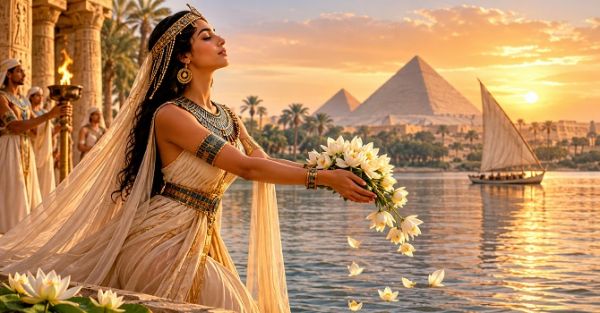
Discover the Ancient Egyptian Legend Behind the River
Few rivers have shaped a civilization as profoundly as the Nile. For thousands of years, its annual floods brought life to ancient Egypt, nourishing crops, supporting communities, and sustaining one of the world's greatest civilizations. Beyond its practical importance, however, the Nile also inspired fascinating religious beliefs, traditions, and legends.
One of the most intriguing stories associated with Egyptian culture is the legend of the Bride of the Nile, known in Arabic as Arous El Nil. According to popular folklore, a beautiful young woman was once offered to the river to ensure a successful annual flood.
The story has fascinated generations of travelers and history enthusiasts. But did ancient Egyptians really sacrifice a young woman to the Nile, or is this a legend that developed over centuries?
Who Was the Bride of the Nile?
The Bride of the Nile is a traditional Egyptian legend connected with the annual flooding of the Nile River.
According to its most famous version, ancient Egyptians believed that the river needed a special offering to guarantee its yearly flood. A young woman was supposedly dressed as a bride and sacrificed to the Nile to secure fertile farmland and abundant harvests.
In some versions, the woman was selected from the community, dressed in beautiful clothes, and ceremonially thrown into the river.
Although this story became one of Egypt's most recognizable legends, there is no reliable archaeological or contemporary ancient Egyptian evidence proving that young women were regularly sacrificed to the Nile.
The legend may have developed through a combination of ancient religious symbolism, later folklore, and historical traditions. Understanding its origins requires exploring the extraordinary importance of the Nile to Egyptian civilization.
Why Was the Nile So Important to Ancient Egyptians?
Ancient Egypt developed along the Nile because its waters made agriculture possible in an otherwise largely desert environment.
Every year, the river traditionally overflowed its banks, spreading water and nutrient-rich silt across surrounding farmland. This natural process supported the cultivation of wheat, barley, vegetables, and other crops that sustained Egyptian communities.
The annual flooding was so important that ancient Egyptians organized their agricultural calendar around three main seasons:
- Akhet (Inundation): The season when the Nile flooded agricultural lands.
- Peret (Emergence): The growing season when water receded and farmers cultivated their fields.
- Shemu (Harvest): The season when crops were collected and stored.
A successful flood meant productive farmland, food supplies, and economic stability. Insufficient flooding could lead to drought and famine, while excessive flooding could damage settlements and agricultural areas.
Consequently, the Nile was much more than a river. It represented survival, prosperity, fertility, and the continuation of life itself.
Hapi: The Ancient Egyptian God of the Nile Flood
One of the most fascinating aspects of the Bride of the Nile legend is its connection with Hapi, the ancient Egyptian god associated with the annual inundation.
Hapi represented the life-giving power of the Nile flood and was closely associated with fertility, abundance, and agricultural prosperity.
Unlike many other ancient Egyptian gods, Hapi was commonly depicted with a rounded belly and prominent breasts, symbolizing nourishment and the ability to provide abundance. His skin was sometimes represented in blue or green, reflecting water and vegetation.
He was also frequently shown carrying offerings of food and plants.
In some representations, Hapi appears holding together papyrus and lotus plants, symbolizing the unity of Upper and Lower Egypt. This imagery reflects the Nile's importance in connecting the two regions and sustaining the Egyptian kingdom.
The ancient Egyptians also composed hymns praising the Nile flood, expressing gratitude for the water that filled granaries, nourished fields, and supported human life.
The famous Hymn to Hapy demonstrates how deeply the river was embedded in ancient Egyptian religious and cultural life.
Did Ancient Egyptians Really Sacrifice a Woman to the Nile?
This is probably the most interesting question surrounding the Bride of the Nile.
Despite the popularity of the story, there is no convincing contemporary Pharaonic evidence confirming that ancient Egyptians regularly sacrificed young women to guarantee the annual flood.
Some researchers suggest that the legend may have developed through the reinterpretation of ancient offerings, religious ceremonies, and symbolic representations associated with Hapi.
The story also became associated with later periods of Egyptian history, particularly accounts surrounding the Islamic conquest of Egypt in the seventh century.
According to a famous traditional account, when the Nile failed to rise sufficiently, the governor Amr ibn al-As was approached about continuing the supposed custom of offering a young woman to the river.
The Caliph Umar ibn al-Khattab reportedly rejected the practice and sent a letter to the Nile instead. According to the story, the river subsequently rose.
This account is traditionally presented as the end of the human-sacrifice custom. However, it belongs to later historical and religious narratives rather than verified evidence of an established ancient Egyptian ritual.
The distinction between historical evidence and folklore is important when exploring Egypt's ancient traditions.
The Night of the Drop and Wafaa El Nil Festival
Another fascinating tradition connected with the Bride of the Nile is Leylet El Nuktah, meaning the Night of the Drop.
According to traditional Egyptian folklore, a miraculous drop associated with a tear shed by the goddess Isis fell into the Nile and caused the annual flood.
The story reflects the ancient Egyptian association between divine powers, nature, and the renewal of life.
The Nile's annual rise was also celebrated through traditions known as Wafaa El Nil, meaning the Fulfilment of the Nile.
These celebrations expressed gratitude for the river's life-giving waters and the prosperity they brought to Egyptian communities.
Historical descriptions of these traditions include public gatherings, decorated boats, music, and celebrations along the riverbanks.
Although the stories and celebrations evolved over different historical periods, they demonstrate how deeply the Nile became connected with Egyptian folklore, religious beliefs, and community traditions.
Where Can You Experience the Story of the Nile in Egypt Today?
Although the Bride of the Nile is a legend rather than a verified ancient ritual, visitors to Egypt can explore the landscapes and historical sites that help explain why the river inspired such extraordinary stories.
Aswan and Elephantine Island
Aswan is one of the most fascinating destinations for understanding the historical relationship between ancient Egyptians and the Nile. Elephantine Island was an important religious and trading center, associated with ancient beliefs about the river's waters.
Visitors can explore archaeological remains, enjoy traditional felucca sailing, and admire the beautiful scenery of the Nile.
Luxor and the Ancient Egyptian Temples
Luxor offers an extraordinary opportunity to discover ancient Egyptian religious beliefs and traditions.
Explore Karnak Temple and Luxor Temple, where monumental architecture, inscriptions, and religious imagery reveal the importance of the Nile Valley in ancient Egyptian civilization.
Cairo and the Nile River
Cairo provides another perspective on the Nile's historical and cultural importance. A traditional felucca ride offers a relaxing way to appreciate the river that continues to shape everyday life in modern Egypt.
Visitors can also explore museums and historical landmarks to learn more about Egyptian mythology and ancient traditions.
A Nile Cruise Between Luxor and Aswan
For travelers interested in Egyptian history and culture, a Nile cruise between Luxor and Aswan is one of the most memorable ways to discover Upper Egypt.
Along the journey, visitors can enjoy beautiful river landscapes, traditional villages, and remarkable archaeological sites, including Edfu and Kom Ombo temples.
It is an opportunity to experience the Nile not simply as a historical subject but as a living part of Egypt's identity.
The Bride of the Nile: Legend, History, and the Spirit of Egypt
The Bride of the Nile remains one of Egypt's most intriguing traditional stories, blending folklore, religious beliefs, and the historical importance of the country's greatest river.
Although the popular story of sacrificing a young woman to guarantee the annual flood lacks reliable evidence from ancient Egyptian sources, it reveals something important about the relationship between the Nile and the people who depended on it.
For thousands of years, the river shaped Egyptian agriculture, religion, traditions, and daily life. Its waters helped transform a largely desert landscape into the foundation of one of the world's most remarkable civilizations.
Today, discovering the Nile's history is an essential part of understanding Egypt. Whether exploring the temples of Luxor, sailing around Aswan, or enjoying a luxury Nile cruise, travelers can experience the landscapes and cultural heritage behind the legends that have fascinated people for centuries.
Discover Egypt beyond its famous monuments with our carefully designed Egypt travel packages, featuring private guided tours, luxury holidays, and unforgettable Nile cruise experiences.
Best Egypt Tours 2026
| Tour | Itinerary | Price |
|---|---|---|
| Cairo and Nile Cruise Package | 7 Days | $ 1465 |
| Egypt Pyramid Tour Packages | 8 Days | $ 1775 |
| Luxor and Aswan Tours | 4 Days | $ 665 |
| 5 Star Egypt Tours | 8 Days | $ 1775 |
| Egypt Pyramids Nile Cruise | 10 Days | $ 2300 |
| Cairo Holiday Packages | 5 Days | $ 870 |
| Egypt Overland Tours | 8 Days | $ 1495 |