
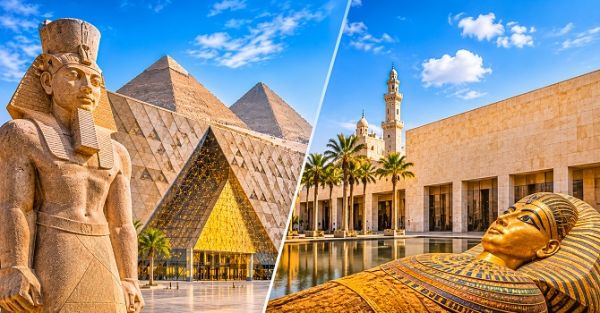
Two Museums, Two Different Ways to Discover Egypt
If you are planning a trip to Cairo, you have probably come across two major attractions: the Grand Egyptian Museum (GEM) and the National Museum of Egyptian Civilization (NMEC).
Both museums offer fascinating insights into Egypt's extraordinary past, but they provide very different experiences. While one focuses primarily on the archaeological treasures of ancient Egypt, the other tells the much broader story of Egyptian civilization, from prehistoric times to the modern era.
So, what is the difference between the Grand Egyptian Museum and the National Museum of Egyptian Civilization? Which one should you visit, and is it worth including both in your Egypt travel itinerary?
Let's explore what makes each museum special.
The Grand Egyptian Museum: Discover the World of the Pharaohs
Located near the Giza Pyramids, the Grand Egyptian Museum is one of the most ambitious cultural projects in Egypt. Its location makes it a natural addition to a visit to the Great Pyramid of Khufu, the Pyramid of Khafre, and the Great Sphinx.
The museum is dedicated primarily to ancient Egyptian civilization, presenting an extraordinary collection of archaeological discoveries, monumental statues, royal artifacts, and objects that reveal how ancient Egyptians lived thousands of years ago.
One of its most remarkable attractions is the collection of treasures belonging to the young pharaoh Tutankhamun. Discovered by British archaeologist Howard Carter in 1922 in the Valley of the Kings, his tomb contained thousands of objects, including the famous golden funerary mask, jewelry, furniture, and ceremonial equipment. The Grand Egyptian Museum brings together this remarkable collection in a dedicated exhibition experience.
Another highlight is the enormous statue of Ramesses II, which welcomes visitors into the museum's Grand Hall. The impressive Grand Staircase is also worth exploring, displaying monumental statues, royal sculptures, and ancient architectural elements that demonstrate the artistic achievements of different Egyptian dynasties.
Beyond its famous treasures, the museum offers a deeper understanding of ancient Egyptian religion, royal traditions, artistic development, and everyday life.
Why visit the Grand Egyptian Museum?
- Discover Tutankhamun's extraordinary treasures.
- See monumental statues and royal sculptures.
- Explore thousands of years of ancient Egyptian archaeology.
- Experience modern exhibition spaces and interactive displays.
- Combine your visit with the nearby Giza Pyramids.
For travelers fascinated by pharaohs, pyramids, ancient Egyptian art, and archaeological discoveries, the Grand Egyptian Museum is an essential Cairo attraction.
The National Museum of Egyptian Civilization: The Story of Egypt Through the Ages
The National Museum of Egyptian Civilization, commonly known as NMEC, is located in historic Fustat, near Old Cairo and overlooking Ain Al-Sira Lake.
Unlike the Grand Egyptian Museum, which concentrates on ancient Egyptian archaeological heritage, NMEC presents a much broader historical perspective. Its exhibitions explore the development of Egyptian civilization from prehistoric times through the Pharaonic, Greek, Roman, Coptic, Islamic, and modern periods.
The museum aims to explain not only what ancient Egyptians built and created but also how Egyptian society developed, adapted, and maintained its cultural identity throughout thousands of years.
Its main exhibition explores different aspects of Egyptian life, including writing, agriculture, industry, religious beliefs, architecture, and traditional crafts. Visitors can discover how the Nile influenced settlement and agriculture and how Egyptian communities developed their distinctive customs and artistic traditions.
One of the museum's most famous attractions is the Royal Mummies Gallery.
This remarkable exhibition features the preserved remains of some of Egypt's most celebrated ancient rulers, including Ramesses II, Hatshepsut, Thutmose III, and Seti I. The gallery is designed to create an atmosphere inspired by the royal tombs of the Valley of the Kings, allowing visitors to encounter these historical figures in a respectful setting.
The museum also displays textiles, clothing, traditional crafts, and objects representing different periods of Egyptian history, providing a fascinating connection between ancient traditions and more recent cultural developments.
Why visit the National Museum of Egyptian Civilization?
- Explore the famous Royal Mummies Gallery.
- Discover Egyptian history beyond the Pharaonic period.
- Learn about Coptic, Islamic, and modern Egyptian heritage.
- Explore traditional textiles, crafts, and everyday objects.
- Understand how Egyptian civilization evolved through the centuries.
For visitors interested in Egyptian culture, historical continuity, and the country's heritage beyond the pyramids, NMEC offers a particularly rewarding experience.
Grand Egyptian Museum vs. NMEC: What Are the Main Differences?
Although both museums celebrate Egypt's heritage, their collections and exhibition approaches are different.
The Grand Egyptian Museum focuses primarily on archaeological discoveries from ancient Egypt, with particular attention to royal history, monumental art, and the achievements of the pharaohs.
The National Museum of Egyptian Civilization takes a wider approach, exploring the development of Egyptian society across different historical periods.
Another important difference is their locations. The Grand Egyptian Museum is situated beside the Giza Pyramids, making it convenient to combine with a visit to the Giza Plateau. NMEC is located in Fustat, making it a suitable addition to a day exploring Old Cairo.
In simple terms, the Grand Egyptian Museum takes you deeper into the world of the ancient pharaohs, while NMEC helps you understand the complete historical and cultural journey of Egypt.
Which Museum Should You Visit During Your Egypt Vacation?
Your choice depends on your interests and the time available in Cairo.
Choose the Grand Egyptian Museum if:
You are fascinated by ancient Egyptian history, royal treasures, archaeological discoveries, and the extraordinary achievements of the pharaohs. It is particularly convenient if you are already planning to visit the Giza Pyramids.
Choose the National Museum of Egyptian Civilization if:
You want to understand Egyptian history beyond the ancient kingdoms. Its Royal Mummies Gallery, cultural collections, and exhibitions covering different historical periods provide a broader perspective on the country's heritage.
Visit both if you have enough time.
The two museums complement each other rather than compete. Together, they provide a more complete understanding of Egypt, from its ancient royal dynasties to the cultural traditions that developed over thousands of years.
Can You Visit Both Museums on the Same Day?
Yes, visiting both museums on the same day is possible, but it can make for a demanding sightseeing schedule.
The Grand Egyptian Museum is a substantial attraction, and visitors interested in its archaeological collections, Tutankhamun treasures, and monumental displays can easily spend several hours exploring it.
NMEC also deserves sufficient time, particularly if you want to visit the Royal Mummies Gallery and explore its historical exhibitions.
For a more relaxed experience, consider dividing the visits into two days.
On the first day, combine the Grand Egyptian Museum with the Giza Pyramids and the Great Sphinx. On the second day, visit the National Museum of Egyptian Civilization alongside the historic attractions of Old Cairo.
This arrangement also makes geographical sense, helping you avoid unnecessary journeys across Cairo.
Two Museums, One Extraordinary Civilization
The difference between the Grand Egyptian Museum and the National Museum of Egyptian Civilization comes down to the story each museum tells.
The Grand Egyptian Museum offers an extraordinary journey into ancient Egypt, showcasing the treasures, monuments, and archaeological achievements of the pharaohs.
The National Museum of Egyptian Civilization takes visitors further, exploring how Egyptian society developed through different historical periods and how its cultural identity evolved over thousands of years.
Neither museum replaces the other. Together, they offer two complementary perspectives on one of the world's most fascinating civilizations.
If you are planning a Cairo visit, including both museums in your Egypt travel itinerary is an excellent way to discover the country's heritage beyond its famous pyramids and temples.
Discover Egypt's greatest historical treasures with our private Egypt travel packages, featuring expert guides and unforgettable cultural experiences.
Best Egypt Tours 2026
| Tour | Itinerary | Price |
|---|---|---|
| Egypt Solar Eclipse Tour | 9 Days | $ 8995 |
| All Inclusive Vacations Egypt | 10 Days | $ 2940 |
| Cairo and Luxor Holidays | 5 Days | $ 1305 |
| Pyramids and Nile Cruise Holidays | 8 Days | $ 1690 |
| Cairo Private Tours | 4 Days | $ 780 |
| Cairo City Breaks | 3 Days | $ 575 |
| Luxury Egypt Tours with Nile Cruise | 12 Days | $ 2610 |
| Nile Cruise and Red Sea Stay | 12 Days | $ 2815 |
| Cairo Nile Cruise and Hurghada | 12 Days | $ 2200 |
| Package Trips to Egypt | 10 Days | $ 2165 |
| Egypt Honeymoon Packages | 10 Days | $ 3180 |