
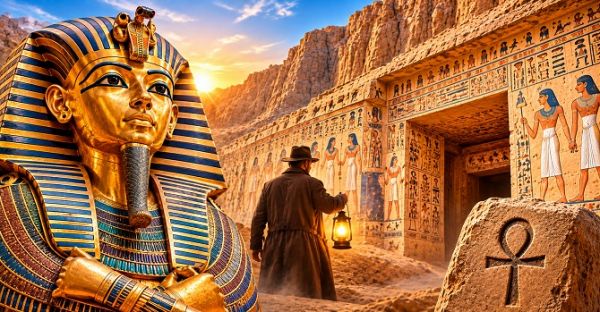
Uncovering the Mystery and Legends of the Pharaohs' Ancient Tombs
What Is the Curse of the Pharaohs?
Few stories connected to ancient Egypt have captured the world's imagination quite like the Curse of the Pharaohs. The idea that disturbing an ancient Egyptian tomb could unleash a supernatural curse, bringing illness, misfortune, or even death, has fascinated travelers, historians, and mystery enthusiasts for generations.
The legend became particularly famous following the discovery of the tomb of Tutankhamun in 1922. After several people associated with the excavation died under unusual circumstances, newspapers around the world began reporting that an ancient curse had been awakened.
But is there any historical evidence behind these mysterious stories? And why did the ancient Egyptians place such importance on protecting royal tombs? Exploring the Curse of the Pharaohs offers an intriguing way to discover the beliefs, burial traditions, and fascinating history of ancient Egypt.
The Discovery That Made the Curse Famous
The story of the Curse of the Pharaohs is closely associated with the discovery of the tomb of King Tutankhamun in the Valley of the Kings near Luxor.
In November 1922, British archaeologist Howard Carter and his Egyptian excavation team uncovered the entrance to a remarkably preserved royal tomb. After years of searching, Carter had discovered the burial place of a young pharaoh whose treasures would become among the most celebrated archaeological finds in history.
When Carter entered the tomb, the world gained an extraordinary glimpse into ancient Egyptian royal life. The burial chambers contained thousands of objects, including golden furniture, ceremonial weapons, jewelry, statues, chariots, and the famous golden funerary mask.
However, the discovery soon became associated with a darker story. Lord Carnarvon, the British financial supporter of the excavation, died in April 1923, only months after the tomb was opened. His death attracted enormous media attention, and rumors quickly spread that he had fallen victim to an ancient Egyptian curse.
Newspapers reported mysterious deaths and strange incidents involving people connected to the excavation. The story grew into an international sensation, transforming an archaeological discovery into one of the most famous mysteries of ancient Egypt.
Did Tutankhamun's Tomb Really Carry a Curse?
Despite the popularity of the story, there is no reliable historical evidence that Tutankhamun's tomb carried a supernatural curse.
Lord Carnarvon died from complications following an infection associated with an insect bite. His death was tragic, but there is no scientific evidence connecting it to the opening of the tomb.
Furthermore, many members of the archaeological team and other individuals involved in documenting and studying the burial treasures lived for decades afterward. Howard Carter himself died in 1939, approximately 17 years after discovering the tomb.
The popular claim that everyone who entered Tutankhamun's tomb died mysteriously is therefore inaccurate.
Some researchers have also discussed the possibility of biological hazards inside ancient burial chambers. Sealed tombs can contain dust, fungi, bacteria, and other microorganisms that may present health risks, particularly during prolonged exposure. However, this possibility does not establish that ancient tombs were deliberately designed to kill intruders.
The distinction between archaeological evidence and sensational storytelling is essential when exploring the real history behind the Curse of the Pharaohs.
Why Did Ancient Egyptians Protect Their Royal Tombs?
To understand the origins of the curse legend, it is important to understand ancient Egyptian beliefs about death and the afterlife.
For the ancient Egyptians, death was not considered the end of existence. They believed that life continued in another world, provided that the deceased received proper burial preparations and the necessary offerings.
The preservation of the body was particularly important because it was connected to the person's continued existence after death. This explains the elaborate mummification process, carefully prepared burial chambers, and extraordinary funerary treasures found inside royal tombs.
Pharaohs were buried with valuable objects, food, furniture, jewelry, and religious items believed to assist them in the afterlife.
Tomb protection was therefore more than a practical security measure. It was connected to religious beliefs, royal authority, and the protection of the deceased's eternal resting place.
Some ancient Egyptian tomb inscriptions included warnings against disturbing the burial or interfering with offerings. These texts could invoke divine punishment against those who violated sacred spaces.
However, the familiar expression "Curse of the Pharaohs" does not represent one universal ancient Egyptian formula. The modern legend developed from a mixture of historical inscriptions, religious beliefs, archaeological discoveries, and newspaper sensationalism.
Ancient Egyptian Tomb Curses: Myth and Historical Evidence
Ancient Egyptian funerary inscriptions sometimes contained warnings intended to discourage tomb robbery and disrespect toward the dead.
Certain tomb texts threatened offenders with punishment from the gods or supernatural consequences. These warnings reflected the religious importance of maintaining the deceased person's offerings and protecting the tomb from unauthorized interference.
Tomb robbery was a serious problem in ancient Egypt, particularly because royal burials contained extraordinary wealth. Precious metals, jewelry, and valuable objects made tombs attractive targets for thieves.
The authorities attempted to protect these burial places through hidden entrances, guarded necropolises, and other security measures. Nevertheless, many tombs were robbed in antiquity.
Interestingly, not every Egyptian tomb contained a curse, and many warnings were directed toward specific actions rather than everyone who entered a burial chamber.
This historical distinction helps explain how genuine ancient Egyptian religious practices eventually became the foundation for a much larger supernatural legend.
The Valley of the Kings: Where Royal Mysteries Remain Alive
The Valley of the Kings is one of Egypt's most remarkable archaeological destinations and the place most closely associated with the modern story of the Pharaohs' curse.
Located on the west bank of the Nile near Luxor, this ancient royal necropolis served as the burial place of numerous New Kingdom pharaohs and important royal figures.
The valley contains more than 60 discovered tombs, many decorated with beautifully preserved scenes from ancient Egyptian religious texts. Their walls display colorful paintings, hieroglyphic inscriptions, and illustrations describing the journey of the deceased through the afterlife.
Visitors exploring the Valley of the Kings can experience the extraordinary atmosphere of these underground chambers while learning about ancient Egyptian burial customs, royal history, and beliefs about eternity.
Although the tombs may appear mysterious, their decorations reveal a sophisticated religious tradition rather than evidence of supernatural danger.
Other Egyptian Mysteries That Inspired the Curse Legend
Tutankhamun's tomb was not the only source of fascination surrounding ancient Egyptian burials. The country's archaeological heritage includes countless discoveries that have encouraged legends about hidden treasures, mysterious symbols, and forgotten royal secrets.
The tomb of Seti I, for example, is famous for its extraordinary wall decorations and detailed religious scenes. Its artistic quality makes it one of the most impressive burial chambers in the Valley of the Kings.
The tomb of Ramesses VI is another remarkable example, featuring astronomical illustrations and elaborate representations of the Egyptian underworld.
Beyond Luxor, the ancient necropolis of Saqqara contains pyramids, mastabas, and burial complexes that reveal how Egyptian funerary architecture developed over thousands of years.
These archaeological sites demonstrate why ancient Egypt continues to inspire mystery enthusiasts. The real discoveries are often more fascinating than the supernatural stories surrounding them.
Can Tourists Visit the Tomb of Tutankhamun Today?
Yes. Visitors can explore Tutankhamun's tomb in the Valley of the Kings as part of a trip to Luxor.
Unlike many royal tombs, its burial chamber is relatively modest in size, but it holds exceptional historical importance because it was discovered with much of its burial equipment still intact.
The tomb also contains the famous painted burial chamber and the mummy of Tutankhamun, which remains in its original resting place.
Visiting the tomb provides a unique opportunity to connect with one of the most significant archaeological discoveries ever made.
Travelers should remember that access to individual tombs can change according to conservation requirements and site regulations. Some tombs may occasionally close for restoration or preservation work, so checking current arrangements before visiting is recommended.
A guided visit to the Valley of the Kings can also help travelers understand the symbolism, history, and religious meaning behind the elaborate decorations.
The Curse of the Pharaohs: Where History Ends and Legend Begins
The Curse of the Pharaohs remains one of the most enduring legends associated with ancient Egypt. Its popularity reflects humanity's fascination with forgotten civilizations, royal treasures, mysterious deaths, and the possibility that ancient secrets might remain hidden beneath the desert.
However, the real story is perhaps even more remarkable. The ancient Egyptians developed extraordinary burial traditions, sophisticated religious beliefs, and monumental architecture to preserve their identity and prepare for the afterlife.
Today, visitors to Luxor and other archaeological destinations can explore these remarkable places without fearing supernatural curses. What awaits them is something far more valuable: a direct encounter with one of the world's greatest ancient civilizations.
Whether you are fascinated by Tutankhamun, ancient Egyptian mythology, mysterious tomb inscriptions, or the archaeological wonders of Luxor, the story of the Pharaohs' curse adds another intriguing dimension to an unforgettable journey through Egypt.
Discover ancient Egypt firsthand with our unforgettable Egypt travel packages, exploring the tombs, temples, and treasures of the pharaohs.
Best Egypt Tours 2026
| Tour | Itinerary | Price |
|---|---|---|
| Cairo and Nile Cruise Package | 7 Days | $ 1465 |
| Egypt Pyramid Tour Packages | 8 Days | $ 1775 |
| Luxor and Aswan Tours | 4 Days | $ 665 |
| 5 Star Egypt Tours | 8 Days | $ 1775 |
| Egypt Pyramids Nile Cruise | 10 Days | $ 2300 |
| Cairo Holiday Packages | 5 Days | $ 870 |
| Egypt Overland Tours | 8 Days | $ 1495 |