
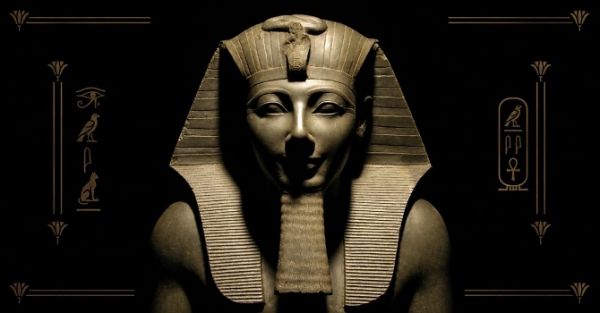
The pharaoh who made Egypt a mighty empire
Known as one of the most important pharaohs of Egypt’s New Kingdom, Thutmose III transformed Egypt from a powerful kingdom into a dominant regional empire. His story connects military campaigns, royal rivalries, monumental temples, and some of the most remarkable archaeological sites visitors can explore today.
For travelers interested in ancient Egyptian history, Egyptian pharaohs, the New Kingdom, Karnak Temple, Luxor, and the Valley of the Kings, Thutmose III is a fascinating figure to know before visiting Egypt.
Who Was Thutmose III?
Thutmose III was a pharaoh of Egypt’s 18th Dynasty, ruling approximately from 1479 to 1425 BCE. He was the son of Thutmose II and a woman named Iset. When his father died, Thutmose III was still too young to exercise full royal authority.
His stepmother, Hatshepsut, initially acted as regent. She later became pharaoh in her own right and ruled alongside the young Thutmose III for roughly two decades.
Far from being an overlooked young prince, Thutmose III eventually became one of Egypt’s most successful rulers. The National Museum of Egyptian Civilization describes his reign as a period in which Egypt reached its greatest territorial extent, stretching from the Euphrates in the north to the Fourth Cataract of the Nile in the south.
What Is Thutmose III Known For?
Thutmose III is best known for his military campaigns, imperial expansion, building projects, and long reign.
After Hatshepsut's death around 1458 BCE, Thutmose III became the undisputed ruler and launched a series of military campaigns into the Levant. Egyptian records describe at least 17 major expeditions, including his famous campaign against the coalition at Megiddo.
The Battle of Megiddo is particularly interesting because Thutmose III's own records at Karnak provide unusually detailed information about the campaign. His forces faced a strategic choice over which route to take toward Megiddo, and the decision to take a difficult but less expected route became part of his reputation as a military strategist.
His campaigns strengthened Egyptian control over territories in modern-day Syria and Palestine and brought wealth, tribute, and political influence to Egypt.
How Did Thutmose III Change Egypt?
Thutmose III changed Egypt in more ways than simply winning battles.
His military successes expanded Egypt's influence far beyond the Nile Valley. He also invested heavily in temples and monuments, particularly at Karnak Temple in Luxor, one of the most important religious complexes in ancient Egypt.
At Karnak, he built the Akh-Menu, sometimes called his Festival Hall, and recorded important events of his reign. One particularly fascinating feature is the so-called Botanical Garden, where reliefs depict plants and animals encountered during foreign campaigns.
For modern travelers, these carvings offer something unusual: they are not merely religious images. They provide a glimpse into how ancient Egyptians observed and recorded the natural world beyond their homeland.
Thutmose III also constructed and renovated monuments throughout Egypt and Nubia. His reign therefore helped strengthen both Egypt's political power and its monumental landscape.
Why Did Thutmose III Destroy Hatshepsut?
This is one of the most common questions about the two famous pharaohs, but the simple story that Thutmose III hated Hatshepsut and destroyed her monuments is not supported by the evidence as confidently as popular history sometimes suggests.
After Hatshepsut died, her name and images were eventually removed or damaged from a number of monuments. However, modern archaeological evidence indicates that much of this destruction happened years after her death, rather than immediately.
The exact reason remains uncertain. One interpretation is that Thutmose III wanted to reinforce the traditional royal succession and ensure that his son, rather than Hatshepsut's descendants, was presented as the legitimate continuation of the royal line.
The Metropolitan Museum of Art notes that Hatshepsut and Thutmose III were genuinely depicted together during their joint reign, while evidence from her monuments demonstrates that she had held the full titles and regalia of a pharaoh.
The important point for visitors is that the relationship between Hatshepsut and Thutmose III was considerably more complicated than a simple story of personal hatred.
Are Moses and Thutmose the Same Person?
The similarity between Moses and Thutmose has fascinated people for generations, especially because both names have Egyptian associations.
However, there is no established historical evidence that Moses and Thutmose III were the same person.
The Egyptian element mose or ms appears in several ancient Egyptian names and is traditionally associated with ideas such as "born" or "son." Thutmose, for example, is generally understood as "Born of Thoth" or "Son of Thoth."
The origin of the name Moses itself remains debated among scholars. Some have proposed an Egyptian connection, while other scholarship argues for a Semitic origin. Recent academic work continues to examine the linguistic evidence.
Most importantly, the similarity between the names does not establish that the two historical figures were identical. There is also no archaeological evidence identifying Thutmose III as the Moses described in the biblical tradition.
For travelers interested in the subject, it is better to view the Moses-Thutmose connection as a historical and linguistic theory rather than an established fact.
How Did Thutmose III Look?
Ancient Egyptian artists usually portrayed pharaohs in an idealized royal style, so statues cannot be treated as exact portraits.
Nevertheless, several surviving statues of Thutmose III give us an idea of how ancient Egyptian artists represented him. The British Museum describes one surviving head as having a rounded, fleshy face, almond-shaped eyes, a narrow mouth, and a slim, slightly hooked nose.
Even more fascinating is his actual mummy.
Thutmose III's mummy is now displayed at the National Museum of Egyptian Civilization in Cairo. His remains were discovered in the Deir el-Bahari royal cache in 1881, where many royal mummies had been moved for protection during antiquity.
The mummy provides visitors with a rare physical connection to a pharaoh whose monuments were built more than 3,000 years ago.
Did Thutmose III Have Any Children?
Yes. Thutmose III had several children, and his son Amenhotep II eventually succeeded him.
Amenhotep II was the son of Thutmose III and is believed to have been born to Queen Merytre-Hatshepsut. He later became pharaoh and continued many of his father's policies, maintaining Egypt's influence in the Levant and Nubia.
Thutmose III therefore played an important role not only in Egypt's territorial expansion but also in establishing the royal succession that followed him.
Why Is Thutmose III So Famous?
Thutmose III is famous because his reign brought together several elements that made the Egyptian New Kingdom extraordinary.
He was a successful military commander, an imperial ruler, a major builder, and a patron of religious monuments. His campaigns extended Egyptian power to its greatest territorial reach, while his building projects left an enduring mark on places such as Karnak and Luxor.
His tomb, KV34 in the Valley of the Kings, is also particularly important. Its unusual decoration illustrates the journey of the sun god through the twelve hours of night, while the burial chamber contains some of the earliest surviving examples of this distinctive funerary tradition.
For travelers, Thutmose III is therefore much more than a name on a list of pharaohs. His story can be followed across the Egyptian landscape—from the monumental temples of Karnak and Luxor to the royal tombs of the Valley of the Kings and the royal mummies preserved in Cairo.
Discover the Egypt of Thutmose III
Walking through Karnak Temple, standing among the monuments of ancient Thebes, or visiting the Valley of the Kings makes the history of Thutmose III feel remarkably close. His reign belongs to a world more than 3,400 years ago, yet the temples, inscriptions, tombs, and royal remains still allow modern travelers to trace the story of one of ancient Egypt's most influential pharaohs.
For travelers who want to experience this history beyond individual monuments, Egypt travel packages combining Cairo, Luxor, ancient temples, the Valley of the Kings, and Nile cruises offer a chance to explore the landscapes that shaped the story of Thutmose III and the New Kingdom.
Best Egypt Tours 2026
| Tour | Itinerary | Price |
|---|---|---|
| Egypt & Jordan Combined Tour | 10 Days | $ 2470 |
| Egypt and Kenya Tours | 15 Days | $ 6250 |
| Egypt and Dubai Tours | 8 Days | $ 999 |
| Cairo and Istanbul Tours | 8 Days | $ 1060 |
| Turkey and Egypt Tours | 12 Days | $ 2825 |
| Egypt and Petra Tours | 12 Days | $ 2255 |
| Egypt and Morocco Tours | 15 Days | $ 4499 |
| Egypt and Jordan Luxury Tours | 8 Days | $ 1275 |
| Egypt and Greece Tours | 14 Days | $ 3380 |
| Egypt Tanzania Tour | 14 Days | $ 6275 |
| Cairo to Petra Tour | 7 Days | $ 945 |
| Egypt and Holy Land Tours | 15 Days | $ 4100 |
| Saudi Arabia and Egypt Tours | 15 Days | $ 4795 |