
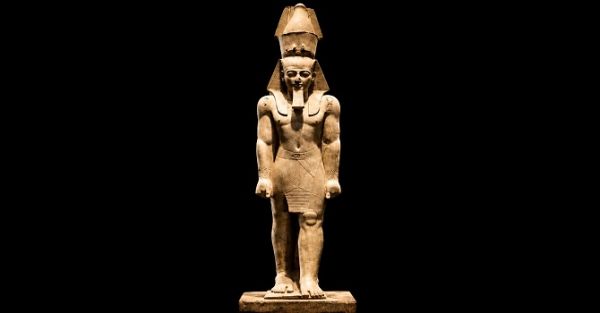
Discover the Pharaoh Behind Egypt’s Greatest Monuments
Who Was Ramesses II?
Imagine standing before four enormous statues carved into a mountainside in southern Egypt. Each represents the same powerful ruler: Ramesses II, one of the most celebrated pharaohs of ancient Egypt. Known as Ramesses the Great, he ruled from approximately 1279 to 1213 BC during Egypt’s 19th Dynasty, leaving behind monuments that continue to fascinate historians, archaeologists, and travelers.
His reign lasted around 66 years, making him one of the longest-reigning pharaohs in Egyptian history. During this time, he commissioned magnificent temples, organized military campaigns, strengthened diplomatic relations, and created an enduring image of royal power.
Today, exploring the monuments of Ramesses II offers visitors a remarkable journey through ancient Egyptian history, from the monumental temples of Abu Simbel to the historic religious complexes of Luxor.
The Rise of Ramesses the Great
Ramesses II was the son of Pharaoh Seti I and Queen Tuya. He became king while still young and inherited a kingdom with a strong military tradition and an impressive history of monumental construction.
Rather than simply continuing his predecessors’ work, Ramesses pursued an ambitious building program across Egypt and its territories. He commissioned statues, decorated temple walls, expanded religious complexes, and established new centers of royal activity.
These projects were more than architectural achievements. In ancient Egyptian society, temples were sacred places dedicated to the gods, while their inscriptions and statues communicated the pharaoh’s authority and relationship with the divine.
Ramesses understood how architecture could preserve his reputation. By placing his image and achievements on monuments throughout the kingdom, he ensured that generations would encounter his name and remember his reign.
For travelers interested in ancient Egypt, these surviving monuments offer valuable opportunities to explore the beliefs, politics, and artistic traditions of one of history’s most remarkable civilizations.
The Colossal Statue of Ramesses II at the Grand Egyptian Museum
One of the first remarkable sights visitors encounter at the Grand Egyptian Museum (GEM), near the Giza Pyramids, is the colossal statue of Ramesses II. Standing approximately 11 meters tall and weighing around 83 tons, this impressive red-granite statue showcases the power and artistic achievement of ancient Egyptian civilization.
The statue originally stood at Memphis, an important ancient Egyptian capital. After spending many years near Cairo's main railway station, it was transferred to the Grand Egyptian Museum, where it now welcomes visitors to the museum's Great Hall. Look closely at the statue's legs and you can see smaller figures representing two of the king's children.
For travelers exploring the Giza Pyramids, seeing this monumental statue is an excellent opportunity to connect ancient Egyptian history with the treasures preserved in one of Egypt's most important modern museums.
Where Is the Mummy of Ramesses II?
While the colossal statue of Ramesses II is displayed at the Grand Egyptian Museum in Giza, the actual mummy of the pharaoh is housed at the National Museum of Egyptian Civilization (NMEC) in Fustat, Cairo.
The mummy is exhibited in the museum's Royal Mummies Hall, alongside the preserved remains of other ancient Egyptian kings and queens. The collection offers visitors a rare opportunity to encounter the physical remains of the rulers whose monuments still dominate Egypt's archaeological landscape.
Ramesses II's mummy was transferred from the Egyptian Museum in Tahrir Square to the National Museum of Egyptian Civilization during the Pharaohs' Golden Parade on April 3, 2021. The specially designed gallery introduces visitors to ancient Egyptian beliefs about death, mummification, and the afterlife.
For travelers interested in the life of Ramesses II, visiting both museums offers two very different experiences: the grandeur of his colossal statue at the Grand Egyptian Museum and the extraordinary historical reality of his preserved body at the National Museum of Egyptian Civilization.
The Battle of Kadesh: War and Diplomacy
One of the most famous events during the reign of Ramesses II was the Battle of Kadesh, fought around 1274 BC against the Hittite Empire in what is now Syria.
The battle was part of a broader struggle for influence over territories in the eastern Mediterranean and the Levant. Both Egypt and the Hittites were powerful kingdoms, and control of strategic cities and trade routes was important to their interests.
Ramesses presented the encounter as a personal triumph. Scenes depicting the battle appeared on the walls of several Egyptian temples, showing chariots, soldiers, and the pharaoh confronting his enemies. These detailed reliefs are valuable historical sources, although they also served as royal propaganda rather than neutral accounts of the conflict.
The military outcome was not a straightforward Egyptian victory. The struggle between the two powers continued, eventually leading to a diplomatic agreement generally dated to around 1259 BC.
The resulting Egyptian-Hittite peace treaty is one of the earliest surviving international peace agreements. It demonstrates that Ramesses II’s legacy involved diplomacy as well as military ambition.
Visitors exploring ancient Egyptian temples can still discover representations of the Battle of Kadesh, providing insight into how pharaohs communicated their achievements and presented themselves to their subjects.
Abu Simbel: A Monument to Royal Power
Abu Simbel is among the most extraordinary archaeological sites in Egypt and one of the greatest architectural achievements associated with Ramesses II.
Located in southern Egypt near the Sudanese border, the complex contains two rock-cut temples commissioned during his reign. The Great Temple is famous for its four colossal seated statues of the pharaoh, carved directly into the mountainside.
Inside, visitors encounter monumental halls, decorated columns, and elaborate reliefs depicting royal ceremonies and military campaigns. The sanctuary contains representations of Amun-Ra, Ra-Horakhty, Ptah, and the deified Ramesses II.
Nearby, the Small Temple is dedicated to the goddess Hathor and Queen Nefertari, the pharaoh’s principal royal wife. Its façade includes statues of the king and queen, with Nefertari represented at a scale comparable to her husband. This is a striking feature of ancient Egyptian royal architecture.
Abu Simbel is also famous for a remarkable solar alignment. Traditionally, sunlight enters the Great Temple and illuminates several figures in the inner sanctuary around February 22 and October 22 each year. The precise original significance of these dates remains debated, but the phenomenon demonstrates sophisticated architectural planning.
The temples faced a serious threat during construction of the Aswan High Dam. In the 1960s, an international UNESCO-led operation dismantled the monuments into sections and relocated them to higher ground to prevent their submersion beneath Lake Nasser.
Today, Abu Simbel is an essential destination for travelers interested in ancient Egyptian engineering, monumental sculpture, and world heritage preservation.
The Ramesseum: Exploring Ramesses II in Luxor
On the West Bank of Luxor, the Ramesseum provides another perspective on the achievements of Ramesses II.
This mortuary temple was constructed to support the king’s funerary worship and preserve his religious legacy after death. Although much of the complex now lies in ruins, its surviving columns, courtyards, reliefs, and monumental stone fragments reveal the enormous scale of the original structure.
The temple walls include scenes associated with the Battle of Kadesh, alongside images of religious ceremonies and royal offerings. These decorations illustrate how ancient Egyptian temples combined spiritual functions with the celebration of royal authority.
One of the site's most recognizable features is the remains of an enormous statue of Ramesses II. Its surviving fragments suggest the extraordinary effort required to quarry, transport, and position such colossal sculptures.
The Ramesseum is an excellent addition to a Luxor sightseeing itinerary, particularly for visitors who want to explore beyond the most famous archaeological attractions.
Karnak and Luxor Temple: Discovering Ancient Thebes
Ramesses II also contributed to the monumental landscape of ancient Thebes, the city now known as Luxor.
Karnak Temple is an extensive religious complex developed by successive generations of Egyptian rulers. It was not constructed by one pharaoh alone, but Ramesses II added to the complex and left his mark through statues and architectural decoration.
Luxor Temple was another important center of religious life. Its monumental statues and royal inscriptions reflect the relationship between the pharaoh and the gods.
The temple was associated with the Opet Festival, during which sacred images of the gods were carried in ceremonial processions. Such festivals reinforced religious traditions and the legitimacy of Egyptian kingship.
Walking through these ancient complexes allows visitors to appreciate the scale of Egyptian architecture and the skill of the artisans who carved hieroglyphs and detailed scenes into stone.
For anyone interested in Egyptian mythology, archaeology, and cultural travel, Karnak and Luxor Temple provide essential context for understanding the world in which Ramesses II ruled.
Queen Nefertari and the Royal Family
Although Ramesses II is often remembered for his military achievements and colossal statues, his family also played an important role in his royal legacy.
Queen Nefertari held a prestigious position at court. Her temple at Abu Simbel reflects her status, while her tomb in the Valley of the Queens is renowned for its beautifully preserved paintings.
The tomb’s vivid decorations portray religious figures, sacred texts, and scenes associated with the journey into the afterlife. They provide a fascinating introduction to ancient Egyptian beliefs about death, rebirth, and eternal existence.
Ramesses II had a large royal family, with numerous wives and children documented through historical and archaeological evidence. Several members of the family appear in inscriptions and monuments across Egypt.
For travelers visiting Luxor, the Valley of the Queens offers a different experience from the colossal temples. Its decorated tombs provide a more intimate perspective on royal life and the artistic traditions of ancient Egypt.
How to Explore Ramesses II’s Monuments
A well-planned Egypt tour can bring together several important locations associated with Ramesses II.
Begin in Luxor, where Karnak Temple, Luxor Temple, and the Ramesseum reveal the religious and political importance of ancient Thebes. The Valley of the Queens is another rewarding stop for visitors interested in royal tombs and ancient Egyptian art.
Continue south to Aswan, a destination known for its Nile scenery, Nubian culture, and access to Abu Simbel. The temples can be visited on a day trip from Aswan, although an overnight stay nearby offers a more relaxed alternative.
A Nile cruise between Luxor and Aswan can complement these visits with stops at other significant ancient sites, including Edfu and Kom Ombo. Abu Simbel generally requires separate transport arrangements because it lies farther south than the standard cruise route.
To enjoy the monuments comfortably, consider visiting outdoor sites early in the morning, particularly during warmer months. A knowledgeable Egyptologist guide can explain the historical background, religious symbolism, and archaeological discoveries that make these places so fascinating.
Why Ramesses II Still Matters Today
More than three thousand years after his reign, Ramesses II remains a defining figure in the history of ancient Egypt. His temples demonstrate architectural ambition, his inscriptions reveal the political language of kingship, and his monuments illustrate the close relationship between religion and royal authority.
His story also connects ancient history with modern heritage preservation. The international rescue of Abu Simbel demonstrates the importance of protecting archaeological treasures for future generations.
For curious travelers, discovering Ramesses II means much more than admiring enormous statues. It offers an opportunity to understand the beliefs, ambitions, and achievements that shaped one of the world's most enduring civilizations.
From Abu Simbel’s colossal façade to the historic temples of Luxor, the legacy of Ramesses II provides an unforgettable reason to explore Egypt beyond its famous pyramids.
Discover Ramesses II’s legacy with our Egypt tour packages, featuring the Giza Pyramids, the Grand Egyptian Museum, Luxor, Abu Simbel, and unforgettable Nile cruises.
Best Egypt Tours 2026
| Tour | Itinerary | Price |
|---|---|---|
| Egypt and Kenya Tours | 15 Days | $ 6250 |
| Egypt and Dubai Tours | 8 Days | $ 1060 |
| Cairo and Istanbul Tours | 8 Days | $ 1250 |
| Turkey and Egypt Tours | 12 Days | $ 2825 |
| Egypt and Petra Tours | 12 Days | $ 2255 |
| Egypt and Jordan Tours With Nile Cruise | 14 Days | $ 3225 |
| Dubai and Egypt Vacation Packages | 12 Days | $ 2390 |
| Egypt and Morocco Tours | 15 Days | $ 4499 |
| Egypt and Jordan Luxury Tours | 8 Days | $ 1275 |
| Cairo to Petra Tour | 7 Days | $ 1050 |
| Egypt and Holy Land Tours | 15 Days | $ 4100 |
| Egypt Tanzania Tour | 14 Days | $ 6275 |
| Egypt and Greece Tours | 14 Days | $ 3750 |